

Car Hauler GVWR, Payload & Tongue Weight: Choose the Right Trailer the First Time
Hero Image Recommendation:
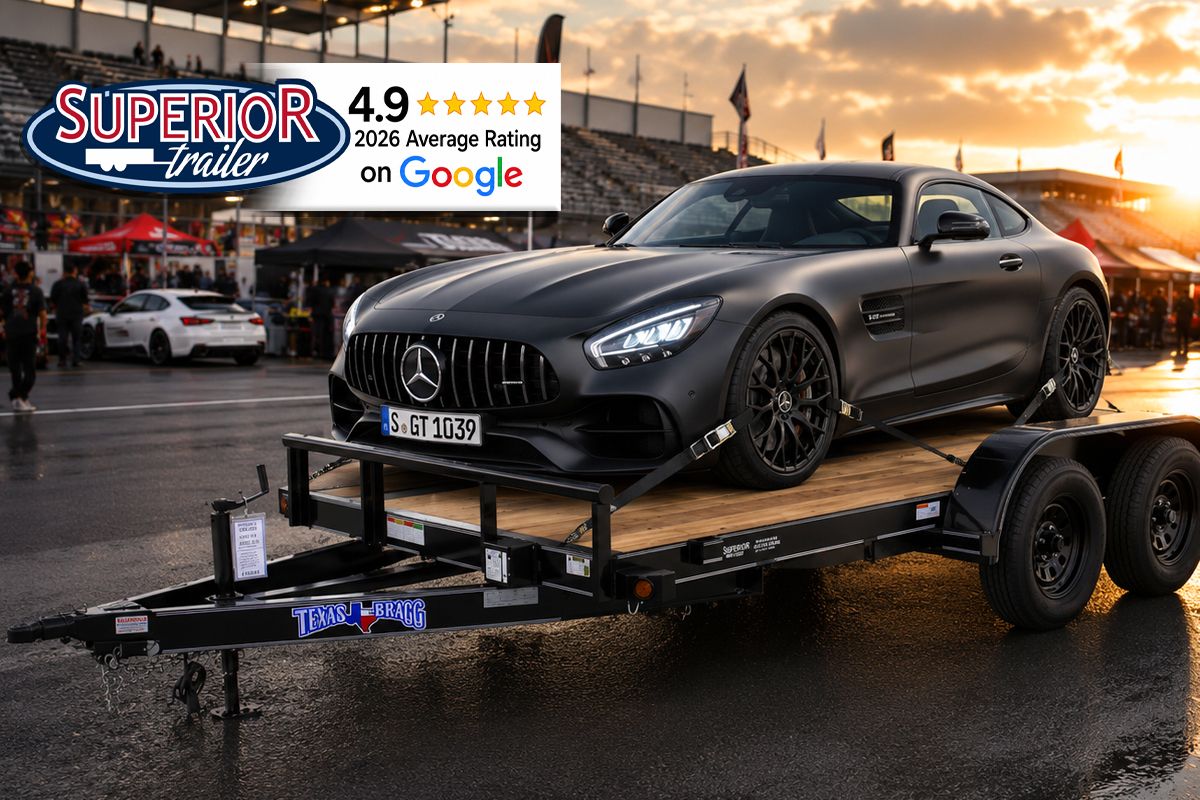
Use a clean, high-resolution landscape photo of a Superior Trailer car hauler loaded with a sports car or pickup, hooked to a capable truck. Keep the trailer centered, show the full length of the deck and hitch connection, and use a bright dealership lot, racetrack paddock, or professional worksite background. Real inventory photography works best because buyers can clearly see the trailer, ramps, axles, wheels, and loading space. Avoid text on the image so it stays clean and professional.
Suggested Alt Text:
“Superior Trailer open car hauler loaded with a sports car and connected to a pickup truck.”
Most people shopping for a car hauler start with two important questions:
- Will my vehicle fit on the trailer?
- Can my truck safely pull it?
Those are the right questions, but the numbers behind them can get confusing fast. GVWR, payload, towing capacity, and tongue weight all matter, but they do not mean the same thing.
At Superior Trailer, we help buyers match the right open car hauler, enclosed trailer, tilt trailer, or gooseneck trailer to the vehicle they plan to haul and the truck they already own. Here is a simple breakdown of what to check before you buy.
GVWR Does Not Mean You Can Carry That Much Cargo
GVWR means Gross Vehicle Weight Rating. It is the maximum total weight the trailer is designed to weigh when fully loaded.
That includes:
- The trailer itself
- Your vehicle or equipment
- Tools, straps, fuel, spare tires, and accessories
The number most buyers really need is the payload capacity.
Simple Formula
GVWR - Empty Trailer Weight = Available Payload
For example:
| Trailer Rating | Empty Trailer Weight | Estimated Payload |
|---|---|---|
| 7,000 lb GVWR | 2,000 lbs | 5,000 lbs |
| 9,990 lb GVWR | 2,900 lbs | 7,090 lbs |
| 14,000 lb GVWR | 3,800 lbs | 10,200 lbs |
A 7,000 lb GVWR car hauler that weighs 2,000 lbs empty does not carry 7,000 lbs of vehicle weight. It carries about 5,000 lbs after the trailer’s own weight is counted.
That can be enough for many cars, small SUVs, side-by-sides, and light trucks. But a full-size pickup, heavily modified vehicle, or loaded race car setup may require a higher-capacity trailer.
Always check the exact trailer’s VIN plate, manufacturer specifications, and listed empty weight before loading.
Open vs. Enclosed Car Haulers: Which Carries More?
At the same GVWR, an open car hauler normally gives you more usable payload than an enclosed trailer.
That is because an enclosed trailer has additional weight from the:
- Walls and roof
- Ramp door
- Interior framing
- Cabinets, electrical options, or added storage
- Extra steel or aluminum structure
An open trailer is usually the best choice when maximum payload, easy loading, and value are your main priorities.
An enclosed trailer is often the better option when you want to protect:
- Collector cars
- Race cars
- Classic vehicles
- Motorcycles and equipment
- Tools, parts, and expensive gear
The tradeoff is simple: enclosed trailers offer more protection, while open trailers often give you more payload for the same GVWR.
Typical Car Hauler Weight Ranges
These are general examples only. Actual weights vary by trailer length, material, axles, ramps, upgrades, and manufacturer.
| Trailer Type | Typical GVWR | Typical Empty Weight | Estimated Payload |
| Single-Car Open Hauler | 7,000 lbs | 1,800–2,300 lbs | 4,700–5,200 lbs |
| Single-Car Enclosed Trailer | 7,000–9,990 lbs | 2,800–4,000 lbs | 3,000–7,190 lbs |
| Two-Car Open Hauler | 9,990–14,000 lbs | 2,500–3,800 lbs | 6,190–11,500 lbs |
| Two-Car Enclosed Trailer | 10,000–14,000 lbs | 3,800–5,500 lbs | 4,500–10,200 lbs |
| Gooseneck Car Hauler | 14,000–25,900 lbs | 4,000–6,500 lbs | 7,500–21,900 lbs |
Before buying, think about what you will haul most often, not just what you are hauling today. Buying with a little room to grow can save you from needing another trailer later.
Tongue Weight Matters More Than Most Buyers Think
Tongue weight is the downward weight the loaded trailer places on the hitch of your truck.
For most bumper-pull car haulers, tongue weight is commonly around 10% to 15% of the loaded trailer weight.
| Loaded Trailer Weight | Approx. Tongue Weight at 10% | Approx. Tongue Weight at 15% |
| 5,000 lbs | 500 lbs | 750 lbs |
| 7,000 lbs | 700 lbs | 1,050 lbs |
| 9,000 lbs | 900 lbs | 1,350 lbs |
| 12,000 lbs | 1,200 lbs | 1,800 lbs |
This matters because your truck may have a towing rating that looks high, but the truck’s payload, receiver hitch, rear axle, tires, and tongue-weight limit can become the real limiting factors first.
A truck might be able to pull a trailer forward, but that does not automatically mean it is properly matched for the tongue weight, cargo, passengers, and gear inside the truck.
Check your truck’s:
- Maximum towing rating
- Payload rating
- Hitch receiver rating
- Tongue-weight limit
- Gross Combined Weight Rating, when applicable
- Owner’s manual and manufacturer towing guide
When a Bumper-Pull Trailer Is Enough
A bumper-pull car hauler is a great choice for many buyers hauling:
- Cars and small SUVs
- Side-by-sides
- Light trucks
- Project cars
- Race cars
- Small equipment
They are easier to hook up, easier to store, and work with standard receiver hitches when properly rated.
For many personal-use buyers, a 7,000 lb, 9,990 lb, or 14,000 lb bumper-pull trailer provides the right mix of capacity, affordability, and flexibility.
When You Should Consider a Gooseneck
A gooseneck trailer may be the better fit when you regularly haul:
- Heavy full-size trucks
- Multiple vehicles
- Commercial equipment
- Large race car setups
- Vehicles over 6,000 lbs
- Heavy loads over longer distances
Gooseneck trailers connect in the truck bed rather than at the rear receiver. This generally provides improved stability and moves more of the trailer’s weight over the truck’s rear axle.
They do require a properly installed gooseneck hitch and a truck equipped to handle the load. For buyers moving serious weight, though, a gooseneck can be a major upgrade in control, capacity, and confidence.
A Simple Way to Match Your Trailer and Tow Vehicle
Before choosing a car hauler, follow this order:
1. Know the weight of the vehicle you will haul most often.
Include extra tools, fuel, tires, straps, and gear.
2. Choose a trailer with enough true payload.
Do not use GVWR alone. Subtract the empty trailer weight.
3. Estimate your loaded trailer weight.
Trailer weight plus vehicle weight plus cargo equals your loaded trailer weight.
4. Check expected tongue weight.
For bumper-pull trailers, plan around 10% to 15% of the loaded trailer weight.
5. Confirm your truck stays within all of its ratings.
Tow rating is important, but payload and tongue weight matter too.
The goal is not to barely meet the numbers. The best setup gives you a comfortable safety margin and makes towing easier, more stable, and less stressful.
Find the Right Car Hauler at Superior Trailer
Whether you need an open car hauler, enclosed trailer, tilt trailer, equipment trailer, or a heavier gooseneck setup, Superior Trailer can help you compare your options before you buy.
Bring us the year, make, model, and approximate weight of what you plan to haul, along with the year and model of your tow vehicle. Our team can help you narrow down the trailer style, size, GVWR, axle setup, and loading options that make the most sense for your needs.
Do not guess on capacity. Get the right trailer the first time.
Contact Superior Trailer today to compare in-stock car haulers, ask about financing options, and find a trailer built for the load you actually need to move.

