
The Real Cost of Owning a Concession Trailer: Startup to Year Three
Buying Guide • July 2026 • 16 min read
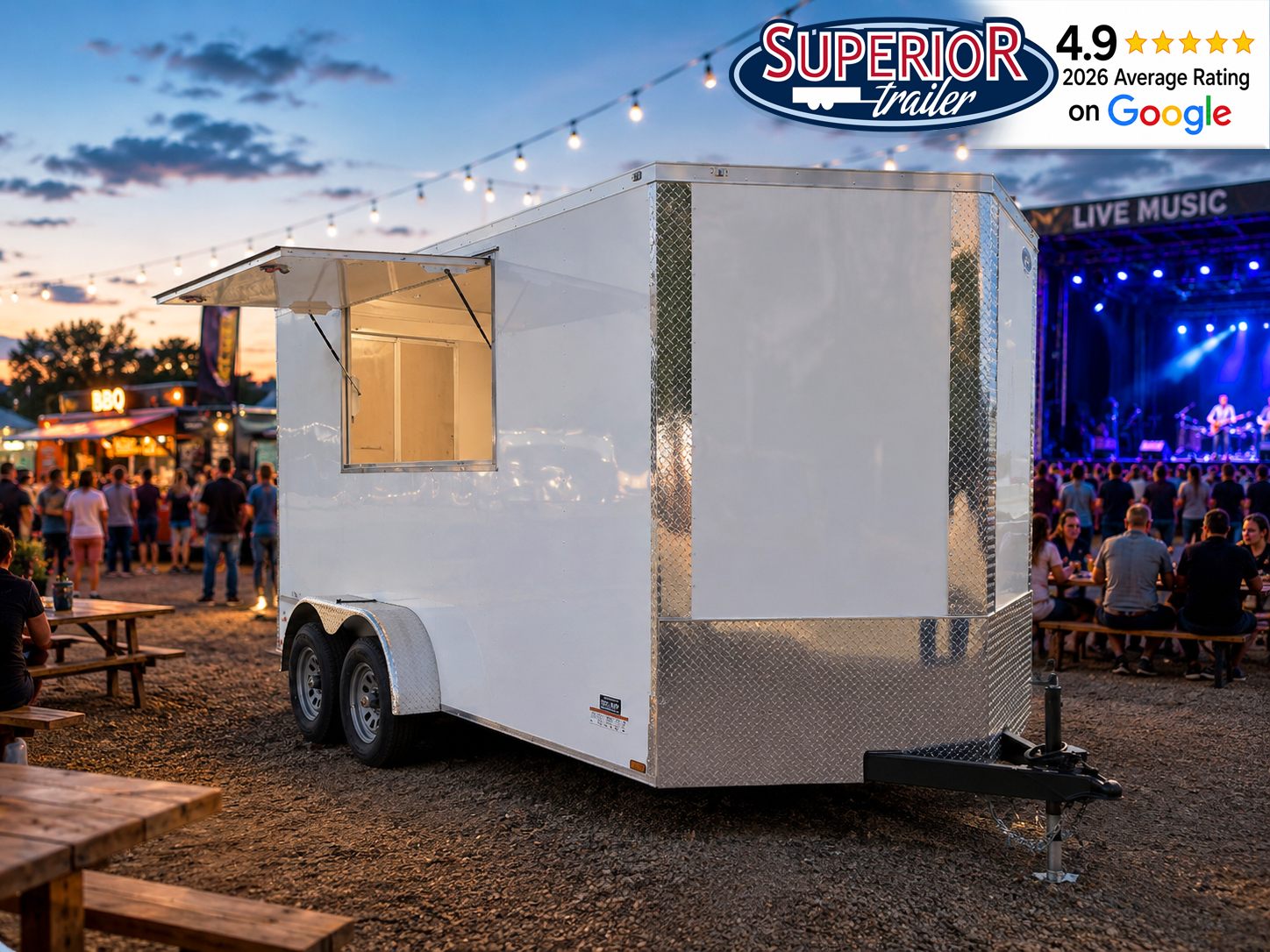
The purchase price of a concession trailer is only one part of the investment required to start a mobile food business.
A trailer may provide the structure, serving window, electrical package and workspace, but a complete operation can also require cooking equipment, refrigeration, plumbing, water tanks, ventilation, fire protection, permits, insurance, branding, point-of-sale equipment and enough working capital to survive the first several months.
That is why two concession trailers with similar exterior dimensions can have dramatically different total startup costs.
One may be designed for packaged snacks and cold drinks. Another may contain fryers, a griddle, refrigeration, a commercial exhaust hood, fire suppression, propane equipment and a full plumbing system.
Before purchasing, buyers should calculate the cost of the complete operation—not just the price shown on the trailer.
Superior Trailer helps food entrepreneurs, caterers, barbecue operators, bakers, event vendors and established businesses find concession trailers in Virginia and North Carolina. Customers can browse available concession trailers, explore financing options and receive continued trailer parts and service support after the purchase.
How Much Does a Concession Trailer Really Cost?
A concession trailer business can require anywhere from a relatively modest investment to well over six figures.
The final amount depends on:
- Trailer size
- New or pre-owned condition
- Basic shell or completed kitchen
- Menu
- Cooking equipment
- Refrigeration
- Electrical demand
- Plumbing requirements
- Exhaust and fire-suppression requirements
- Local permits
- Commissary or service-area needs
- Insurance
- Branding
- Tow vehicle
- Staffing
- Working capital
A basic concession shell may cost significantly less than a fully equipped commercial food trailer. However, purchasing a lower-priced shell does not eliminate the cost of making it legal, safe and practical for the intended menu.
As of July 2026, Superior Trailer’s online inventory included a new 7-by-14-foot concession trailer listed at $9,050 in Richmond. The listed unit represents a concession-style trailer—not necessarily a complete commercial kitchen ready to open immediately. Inventory, equipment, availability and prices can change.
Concession Trailer Cost at a Glance
The following ranges are planning estimates, not quotes. Actual prices depend on the trailer, equipment, jurisdiction, installer and business plan.
| Cost category | Illustrative planning range |
|---|---|
| Concession trailer or shell | $9,000–$30,000+ |
| Interior kitchen buildout and appliances | $15,000–$70,000+ |
| Generator, electrical or power equipment | $2,500–$15,000+ |
| Plumbing, sinks, water heater and tanks | $1,500–$8,000+ |
| Hood and fire-suppression equipment | $5,000–$15,000+ |
| Permits, plan review and inspections | $100–$3,000+ |
| Insurance for the first year | $1,500–$5,000+ |
| Commissary or service-area arrangement | $0–$12,000+ annually |
| Exterior wrap, menu boards and branding | $1,500–$10,000+ |
| Point-of-sale system and technology | $500–$3,500+ |
| Initial smallwares and food inventory | $2,000–$8,000+ |
| Initial working-capital reserve | $5,000–$25,000+ |
A professionally built hot-food operation can therefore cost considerably more than the trailer itself.
These estimates do not automatically include:
- Tow vehicle
- Employee payroll
- Food and beverage purchases
- Financing interest
- Sales tax
- Event-vending fees
- Commercial vehicle insurance
- Fuel
- Storage
- Repairs
- Local business taxes
Cost 1: The Concession Trailer
The first major expense is the trailer itself.
Basic Concession Trailer Shell
A concession shell may include:
- Trailer frame and body
- Serving window
- Finished walls or ceiling
- Basic lighting
- Electrical panel
- Outlets
- Stabilizer jacks
- Side-entry door
- Rear doors
- Counter space
This type of trailer gives the owner flexibility to choose the final kitchen layout.
It may work well for an operator who already has a qualified builder, understands local plan-review requirements and knows exactly what equipment the menu requires.
The risk is purchasing a shell before confirming that the proposed layout will pass health, fire, building and electrical review.
Partially Equipped Concession Trailer
A partially equipped trailer may also include:
- Handwashing sink
- Three-compartment sink
- Freshwater tank
- Wastewater tank
- Water heater
- Refrigerator
- Stainless-steel work surfaces
- Air conditioning
- Basic shelving
This can reduce the amount of installation work, but every included component should still be evaluated against the requirements of the jurisdiction where the unit will operate.
Turnkey Concession Trailer
A turnkey unit may contain most of the equipment needed for a specific menu.
That might include:
- Commercial fryer
- Griddle
- Range
- Oven
- Refrigeration
- Freezer
- Prep tables
- Exhaust hood
- Fire-suppression system
- Propane system
- Plumbing
- Generator
- Point-of-sale area
“Turnkey” should never be interpreted as “automatically approved everywhere.”
A trailer built for one locality or menu may need modifications before it can be permitted somewhere else. The health department and fire marshal reviewing the proposed business have the final authority over what is acceptable.
Cost 2: Choosing the Correct Trailer Size
Trailer size affects more than the original price.
It also determines:
- How many employees can work safely
- How much equipment can be installed
- Available storage
- Water-tank capacity
- Generator demand
- Tongue weight
- Total loaded weight
- Tow-vehicle requirements
- Heating and cooling costs
- Event-space requirements
A smaller unit may be suitable for:
- Coffee
- Lemonade
- Shaved ice
- Packaged food
- Baked goods
- Simple cold-service menus
- Limited reheating
A larger tandem-axle concession trailer may be more appropriate for:
- Burgers
- Fried foods
- Barbecue
- Pizza
- Full meal service
- Multiple cooking stations
- High-volume event service
Buying too small can lead to an expensive replacement or major reconstruction.
Buying too large can increase the trailer payment, tow-vehicle requirement, fuel consumption and event-space fees without producing additional revenue.
The right trailer is the smallest unit that can safely and legally support the menu, equipment, employees and expected volume.
Cost 3: Commercial Kitchen Equipment
Cooking and refrigeration equipment can become the largest part of the buildout.
Common equipment includes:
- Griddles
- Fryers
- Ranges
- Ovens
- Smokers
- Steam tables
- Refrigerators
- Freezers
- Sandwich-preparation tables
- Hot-holding cabinets
- Ice machines
- Beverage dispensers
- Coffee equipment
- Food processors
Residential appliances may cost less initially, but they may not satisfy the applicable equipment, sanitation, durability or fire requirements.
North Carolina guidance does not impose one blanket NSF/ANSI certification requirement on every piece of equipment in every mobile operation. Equipment must instead comply with the applicable Food Code requirements and be acceptable to the regulatory authority. Virginia jurisdictions may require approved NSF or equivalent equipment and may reject home-style equipment. Confirm local standards before purchasing appliances.
Build the Menu Before Buying Equipment
Equipment decisions should begin with the menu.
The health department may request:
- Complete menu
- Food-preparation procedures
- Cooking methods
- Cooling methods
- Reheating methods
- Equipment specification sheets
- Scaled floor plan
- Water-system information
- Electrical requirements
- Waste-disposal procedures
Changing the menu after the trailer has been designed can create major expenses.
For example, adding fried food may require more than purchasing a fryer. It may also trigger changes involving:
- Ventilation
- Fire suppression
- Propane
- Electrical capacity
- Fire inspection
- Grease management
- Cooking clearances
- Interior finishes
Finalizing the menu first helps prevent paying for the same space twice.
Cost 4: Plumbing and Water Systems
Most full-service concession trailers need a self-contained water system.
Depending on the operation and local requirements, this may include:
- Handwashing sink
- Three-compartment sink
- Hot and cold water
- Freshwater tank
- Wastewater tank
- Water heater
- Water pump
- Approved hoses
- Drain lines
- Backflow protection
- Exterior servicing connections
Water adds considerable weight.
Freshwater, wastewater, cooking equipment, food, propane, refrigerators and supplies must all be considered when evaluating the trailer’s payload capacity and the tow vehicle’s ratings.
A poorly planned plumbing layout can also consume valuable cabinet and storage space.
Cost 5: Exhaust, Ventilation and Fire Suppression
Cooking appliances that produce grease-laden vapors, smoke or significant heat may require a commercial exhaust hood and an automatic fire-suppression system.
Requirements depend on:
- Appliance type
- Fuel source
- Menu
- Local fire code
- Hood design
- Trailer construction
- Equipment clearances
- Fire-marshal interpretation
Virginia specifically applies fire-safety requirements to mobile food establishments and directs operators to coordinate with the applicable fire marshal.
Do not purchase a used hood or install cooking equipment before confirming:
- Required hood classification
- Required airflow
- Suppression-system design
- Makeup-air needs
- Fire-extinguisher type
- Propane-storage rules
- Generator placement
- Required clearances
- Inspection and certification requirements
A fire-suppression system may also require recurring inspection and service after installation.
Cost 6: Electrical Power, Generator Fuel and Propane
A concession trailer may receive power from:
- Shore-power connection
- Generator
- Battery and inverter system
- Solar-assisted system
- A combination of power sources
The correct system depends on the total electrical load.
Add the power demand of:
- Refrigerators
- Freezers
- Air conditioning
- Water heater
- Lights
- Exhaust fans
- Warmers
- Pumps
- Ice equipment
- Coffee equipment
- Point-of-sale system
- Small appliances
Equipment startup demand can be higher than its normal running demand. An undersized generator may trip breakers, damage equipment or interrupt service during an event.
Generator ownership also creates ongoing expenses:
- Fuel
- Oil changes
- Filters
- Spark plugs
- Batteries
- Repairs
- Noise-control equipment
- Secure mounting
- Replacement reserve
Propane-powered operations must also budget for:
- Cylinders or tanks
- Regulators
- Approved lines
- Mounting system
- Leak testing
- Refills
- Inspections
Power and fuel should be treated as regular operating expenses, not occasional surprises.
Cost 7: Health, Fire and Local Permits
Permit costs are usually smaller than equipment costs, but permit problems can delay an opening for weeks or force expensive modifications.
The exact process depends on the state, county, city, menu and operating location.
North Carolina Mobile Food Unit Requirements
North Carolina defines a mobile food unit as a food establishment designed to be readily moved and generally without permanent utility connections other than an onsite electrical connection.
A separate commissary is not automatically required in every North Carolina situation. State guidance allows a mobile unit to operate as its own commissary when it satisfies the applicable commissary requirements. Otherwise, it must use a permitted restaurant or commissary as its base of operation.
That evaluation can involve:
- Food storage
- Utensil storage
- Cold holding
- Warewashing
- Cleaning facilities
- Potable-water supply
- Wastewater disposal
- Refuse disposal
- Toilet access
- Employee belongings
- Service area
Operators should contact their county environmental-health department before purchasing equipment or signing a commissary contract.
Virginia Mobile Food Unit Requirements
Virginia requires plan review before opening a new or remodeled foodservice operation, including a mobile food unit.
As of May 2026, the Virginia Department of Health listed a $40 plan-review fee and a separate $40 permit-application fee. The permit application should be submitted at least 30 days before the planned opening, although local policies and additional requirements may apply.
Virginia issues mobile food permits as stickers that must be displayed on the unit.
A Virginia commissary may be required when the trailer lacks sufficient cooking, cooling, cold-storage or cleaning capacity. Mobile units also need an approved service area for potable water and wastewater disposal.
Additional Local Costs
Depending on the location, an operator may also need:
- Business license
- Zoning approval
- Fire inspection
- Propane inspection
- Building or electrical approval
- Sales-tax registration
- Sign permit
- Vending-location permit
- Event permit
- Temporary food permit
- Parking authorization
- Food-protection manager certification
Requirements can change when a trailer crosses into another county or state.
Cost 8: Commissary or Service-Area Expenses
A commissary is a permitted food facility that may support the trailer with:
- Food preparation
- Refrigerated storage
- Dry storage
- Warewashing
- Water
- Wastewater disposal
- Grease disposal
- Equipment cleaning
- Employee facilities
Some operators rent space from a shared commercial kitchen. Others establish an agreement with a restaurant or approved facility.
Pricing can be structured as:
- Hourly rental
- Daily rental
- Monthly membership
- Storage charges
- Cleaning charges
- Water or waste charges
- Minimum-use commitment
Before signing an agreement, confirm that the proposed commissary is acceptable to the health department reviewing the mobile unit.
Do not assume that access to an ordinary restaurant kitchen automatically satisfies the requirement.
Cost 9: Insurance
Insurance needs vary according to the business, equipment, locations and contracts.
Common policies may include:
- General liability
- Product liability
- Commercial property
- Trailer physical-damage coverage
- Commercial vehicle insurance
- Workers’ compensation
- Business interruption
- Equipment breakdown
- Inland marine coverage
- Event-specific coverage
Festivals, municipalities, landlords and private venues may require specific liability limits or ask to be listed as an additional insured.
Get insurance quotes before signing large event contracts. The required limit can significantly affect annual cost.
Cost 10: The Tow Vehicle
A concession trailer is only useful when it can be moved safely.
The tow vehicle must be evaluated for:
- Maximum towing capacity
- Gross combined weight rating
- Payload
- Hitch rating
- Tongue weight
- Brake-controller compatibility
- Tire ratings
- Cooling capacity
- Axle ratings
The advertised empty weight of the trailer is not its operating weight.
The loaded trailer may also contain:
- Water
- Wastewater
- Propane
- Generator
- Food
- Ice
- Appliances
- Cookware
- Packaging
- Cleaning supplies
- Employees’ supplies
A larger tow vehicle can add a substantial cost to the business plan. It also creates additional fuel, insurance, maintenance and registration expenses.
Cost 11: Branding, Menus and Point-of-Sale Equipment
The exterior of the trailer is often the business’s largest advertisement.
Branding costs may include:
- Logo design
- Full or partial vehicle wrap
- Menu boards
- Exterior lighting
- Photography
- Website
- Online ordering
- Social-media content
- Printed menus
- Loyalty program
- Business cards
- Event banners
Point-of-sale costs may include:
- Tablet or terminal
- Receipt printer
- Cash drawer
- Card reader
- Mobile hotspot
- Software subscription
- Online-ordering fees
- Transaction charges
Do not cover required trailer identification, reflectors, lights, vents or permit stickers with a wrap.
Cost 12: Food, Disposables and Opening Inventory
Before opening, the business may need:
- Ingredients
- Drinks
- Condiments
- Cooking oil
- Seasonings
- Takeout containers
- Cups
- Napkins
- Utensils
- Gloves
- Sanitizer
- Cleaning chemicals
- Paper towels
- Thermometers
- Smallwares
- Fire-safe waste containers
Buying too much inventory creates spoilage and cash-flow pressure.
Buying too little can cause the business to sell out before recovering the cost of attending an event.
Track the actual food cost of each menu item instead of estimating by feel.
Cost 13: Event and Location Fees
A food trailer may pay to operate at:
- Festivals
- Farmers markets
- Breweries
- Office parks
- Weddings
- Private events
- School events
- Sports facilities
- Fairs
- Concerts
A venue may charge:
- Flat fee
- Percentage of sales
- Minimum guarantee
- Electricity fee
- Water fee
- Waste fee
- Parking fee
- Staff admission
- Insurance-document fee
A busy event is not automatically profitable.
Estimate:
- Expected attendance.
- Expected percentage of attendees who will buy.
- Average order value.
- Food cost.
- Labor.
- Travel.
- Event fee.
- Fuel and power.
- Credit-card fees.
- Waste and unsold inventory.
Cost 14: Maintenance and Repair
A concession trailer combines a road-going trailer with a working commercial kitchen.
That means owners must maintain both systems.
Trailer Maintenance
Common trailer service includes:
- Tires
- Wheel bearings
- Brakes
- Axles
- Suspension
- Wiring
- Lights
- Coupler
- Jack
- Safety chains
- Roof seals
- Doors
- Serving windows
- Flooring
Kitchen and Utility Maintenance
The interior may require:
- Refrigerator repair
- Generator service
- Water-pump replacement
- Plumbing repairs
- Water-heater service
- Hood cleaning
- Fire-suppression inspection
- Propane-system service
- Air-conditioning repair
- Electrical diagnosis
Superior Trailer provides trailer service and repair for all makes and models. Its listed services include wiring repair, brake repair, axle repacking, suspension repair, floor replacement, tire replacement, body repair and general trailer maintenance.
A maintenance reserve should be included in the budget from the first month rather than waiting for something to fail.
The Real Cost by Year
Startup Period: Before the First Sale
The pre-opening period usually includes the largest one-time expenses:
- Trailer purchase or down payment
- Kitchen buildout
- Cooking equipment
- Refrigeration
- Plumbing
- Power system
- Hood and fire suppression
- Permits
- Insurance deposit
- Wrap and branding
- Point-of-sale equipment
- Opening inventory
- Professional services
- Initial working capital
The business may spend money for several months before earning revenue.
That is why working capital matters. An operator who uses every available dollar on the buildout may have nothing left for food, payroll, fuel, event deposits or unexpected corrections.
Year One: Learning the Real Operating Cost
Year one reveals what the original business plan missed.
Common first-year surprises include:
- More generator fuel than expected
- Additional insurance requirements
- Event fees
- Slow-season revenue
- Spoilage
- Credit-card charges
- Repairs after road travel
- Menu changes
- Additional refrigeration
- Storage needs
- Higher labor requirements
- Advertising costs
Keep separate records for each event. A profitable Saturday can hide an unprofitable weekend when travel, labor, fuel and waste are ignored.
Year Two: Improving Efficiency
By year two, the operator should have better information about:
- Best-selling items
- True food cost
- Most profitable events
- Labor requirements
- Generator consumption
- Seasonal demand
- Average transaction amount
- Customer return rate
Year two may also involve:
- Replacing small equipment
- Updating the wrap
- Improving the menu board
- Adding online ordering
- Refinancing or paying down debt
- Purchasing more storage
- Replacing tires
- Expanding catering services
The goal should be to increase profit per service hour—not simply attend more events.
Year Three: Replacement and Expansion Decisions
By year three, wear becomes more noticeable.
Possible expenses include:
- Tires
- Brakes
- Wheel bearings
- Generator repairs
- Refrigerator replacement
- Water-pump replacement
- Roof or window resealing
- Electrical repairs
- Hood or suppression service
- Interior flooring
- Exterior graphics
- Equipment upgrades
Year three is also when an owner may decide whether to:
- Keep the current trailer
- Expand the menu
- Add a second unit
- Move into a larger trailer
- Establish a permanent location
- Sell or trade the trailer
A well-maintained trailer with organized records may retain more value than a neglected unit with undocumented modifications.
Three-Year Concession Trailer Budget Examples
The figures below are broad planning examples. They exclude payroll, food purchases, tow-vehicle cost, financing interest and income taxes.
| Operation type | Year 1 | Year 2 | Year 3 | Illustrative three-year total |
| Limited-menu or beverage unit | $35,000–$60,000 | $10,000–$25,000 | $12,000–$30,000 | $57,000–$115,000 |
| Mid-sized hot-food operation | $70,000–$120,000 | $20,000–$45,000 | $25,000–$55,000 | $115,000–$220,000 |
| High-volume turnkey operation | $120,000–$220,000+ | $40,000–$80,000 | $50,000–$95,000 | $210,000–$395,000+ |
A beverage operation with minimal cooking has a very different cost structure from a large trailer serving fried and grilled food.
The most useful budget is one built around the actual menu, local requirements and expected event schedule.
How to Calculate the Break-Even Point
The break-even point tells the operator how many orders must be sold to cover fixed expenses.
Use this formula:
Monthly fixed costs ÷ contribution per order = orders required to break even
Contribution per order means the sale price minus direct costs such as food, packaging and card-processing fees.
Example:
- Monthly fixed expenses: $4,000
- Average sale: $14
- Direct cost per order: $6
- Contribution per order: $8
$4,000 ÷ $8 = 500 orders per month
At 20 operating days per month, that equals:
500 ÷ 20 = 25 orders per day
This example does not include the owner’s desired salary or taxes. Those amounts should be added to the monthly target.
Ways to Control Concession Trailer Costs
Start With a Focused Menu
A smaller menu can reduce:
- Equipment requirements
- Inventory
- Waste
- Refrigeration
- Preparation time
- Employee training
- Inspection complexity
Obtain Plan Review Before Construction
Submit the proposed menu, equipment and layout before completing expensive installation work.
Purchase the Correct Trailer First
Do not buy solely because a trailer is inexpensive. Confirm dimensions, axle capacity, electrical service, interior height and serving-window placement.
Separate Must-Haves From Future Upgrades
Items such as decorative lighting, premium counters or extra screens may be delayed until the business produces revenue.
Build a Maintenance Reserve
Set aside money from every event for repairs and replacement.
Compare Cash Purchase With Financing
Paying cash avoids interest but can consume working capital.
Financing may preserve cash for:
- Equipment
- Permits
- Food
- Payroll
- Insurance
- Marketing
- Emergency repairs
Superior Trailer offers financing access for qualifying new and pre-owned trailer customers in Virginia and North Carolina. Financing programs, approval requirements, down payments, rates and terms vary.
Questions to Ask Before Buying a Concession Trailer
Before placing a deposit, ask:
- Is the advertised price for a shell or completed kitchen?
- Which equipment is included?
- What is the trailer’s empty weight?
- What is its gross vehicle weight rating?
- How much payload remains after the buildout?
- What electrical service is installed?
- Is a generator included?
- Are the freshwater and wastewater tanks included?
- Are sinks and a water heater installed?
- Is a hood included?
- Is fire suppression included and currently certified?
- Does the layout match the proposed menu?
- Has the local health department reviewed the plan?
- Has the fire marshal reviewed the cooking system?
- What tow vehicle is required?
- Is financing available?
- What warranty applies?
- Where can the trailer be serviced?
Why Buy a Concession Trailer From Superior Trailer?
A concession trailer is not only a purchase. It is a long-term business asset that will need financing support, replacement parts, routine maintenance and repairs.
Superior Trailer gives customers access to:
- New and pre-owned trailer inventory
- Concession trailer options
- Financing and rent-to-own relationships
- Trailer parts
- Routine maintenance
- Electrical repair
- Brake and axle service
- Structural and body repair
- Trailer customization
- Multiple Virginia and North Carolina locations
Superior Trailer currently serves customers through:
- Burlington, North Carolina
- Virginia Beach, Virginia
- Richmond, Virginia
- Suffolk, Virginia
The company’s current website confirms these four locations, along with financing and trailer service support.
Whether you are starting a coffee trailer, mobile bakery, barbecue operation, dessert business or full commercial food trailer, the Superior Trailer team can help you compare available trailer sizes, features and financing paths.
Concession Trailer Cost Frequently Asked Questions
How much does a concession trailer cost?
A concession shell may begin in the low five figures, while a completed commercial kitchen trailer can cost substantially more. The final cost depends on the trailer, equipment, plumbing, electrical system, fire protection, permits and menu.
What is the difference between a concession trailer and a food trailer?
The terms are often used interchangeably. Some concession trailers are simple vending units, while a food trailer generally suggests a more complete food-preparation operation. The installed equipment and approved menu matter more than the name.
Is a $10,000 concession trailer ready to operate?
Not necessarily. A trailer near that price may be a shell with a serving window and basic electrical features. Commercial appliances, sinks, tanks, ventilation, fire protection, permits and branding may still be needed.
Do concession trailers need a commissary?
It depends on the state, locality and design. North Carolina may allow a mobile food unit to serve as its own commissary when it satisfies the applicable requirements. Virginia may require a commissary when the unit lacks sufficient preparation, storage or cleaning capacity. Local approval is essential.
Can concession trailers be financed?
Financing may be available for qualified buyers. Approval, rates, terms and down-payment requirements depend on the lender, applicant and trailer.
Can a used concession trailer save money?
Possibly, but inspect the frame, axles, brakes, tires, roof, wiring, plumbing, propane, hood, fire suppression and kitchen equipment. Also verify that the existing layout can be approved for the intended menu and location.
Can I build out the trailer myself?
Some owners complete portions of the work themselves. Electrical, propane, plumbing, ventilation and fire-suppression work may require licensed professionals, permits or documented inspections. Obtain approval before construction.
Is a concession trailer tax-deductible?
A trailer and qualifying business equipment may be eligible for depreciation or a Section 179 deduction, depending on ownership, business use and other tax rules. For tax years beginning in 2026, the IRS lists a general Section 179 maximum of $2.56 million, subject to phaseout and business-income limitations. Consult a qualified tax professional regarding the specific trailer and business.
What is the largest cost after buying the trailer?
For many hot-food operations, commercial kitchen equipment, power, ventilation, fire suppression, labor and food inventory can exceed the original shell price.
How much working capital should a food trailer have?
The correct amount depends on monthly fixed expenses and expected revenue. A practical reserve should cover several months of payments, insurance, commissary rent, food, fuel, event fees and emergency repairs.
Start Your Concession Trailer Business With Superior Trailer
The real cost of a concession trailer is not one number.
It is the combined cost of:
- The trailer
- The kitchen
- Legal compliance
- Power
- Insurance
- Transportation
- Inventory
- Marketing
- Maintenance
- Working capital
Planning those expenses before purchasing gives the business a better chance of reaching year three with manageable debt, reliable equipment and enough cash to continue growing.
Browse current concession trailers, request an out-the-door price or explore financing through Superior Trailer.
Superior Trailer is ready to help customers in Virginia and North Carolina find a concession trailer built for the road ahead.
Prices, inventory, regulations, permits, lender programs and tax rules may change. Verify current requirements with the applicable health department, fire marshal, insurance provider, financing company and tax professional before purchasing or modifying a concession trailer.
Need Help Deciding?
Our team can walk you through available new and used inventory and help match the right trailer to your needs and budget.
Contact us today →
