

What Size Dump Trailer Do You Actually Need? A Practical Guide
Buying Guide • July 2026 • 12 min read
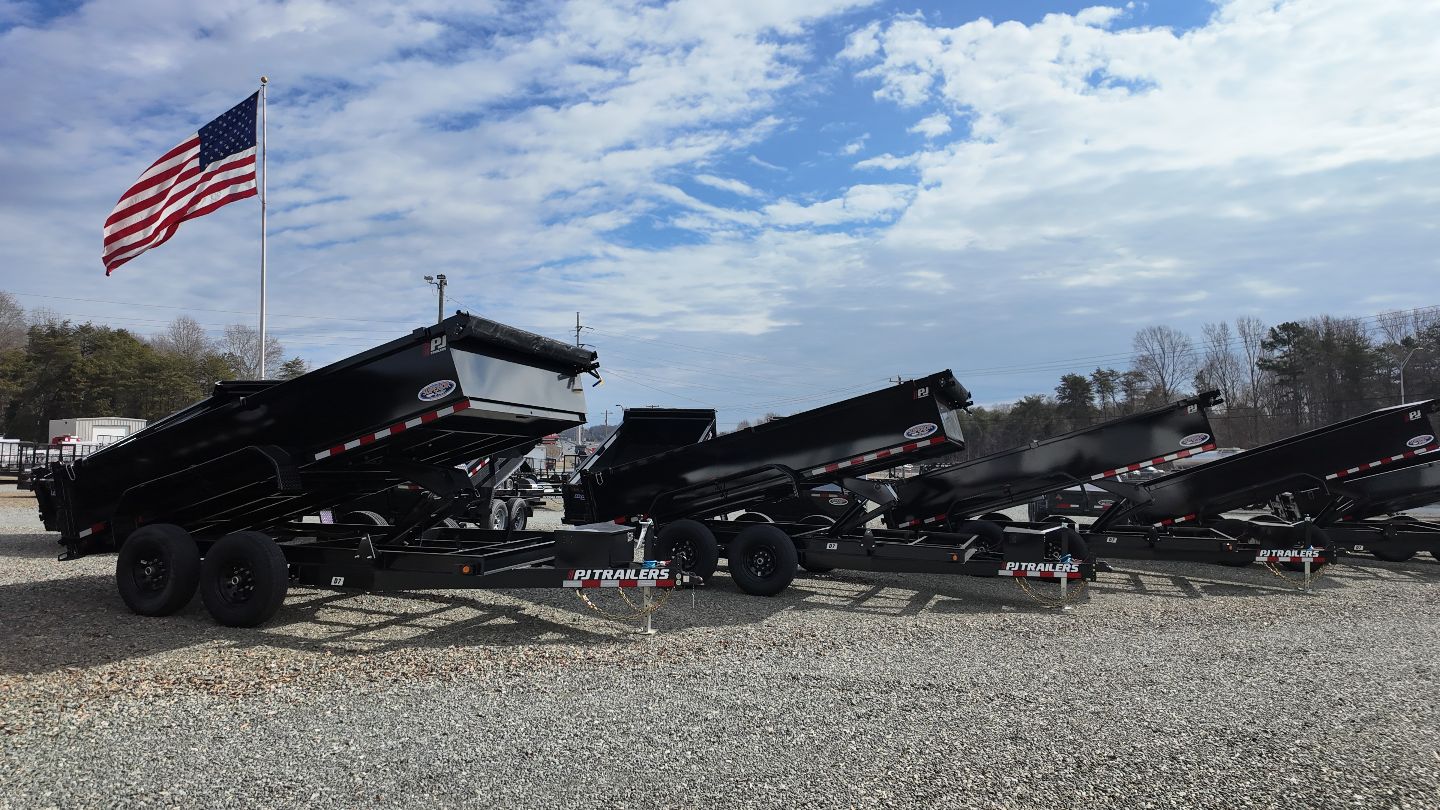
Choosing a dump trailer is not as simple as deciding between a 6x12 and a 7x14.
The right dump trailer must be large enough to handle your normal workload without forcing you to make unnecessary trips. At the same time, it must stay within the towing, payload, hitch, axle, and braking limits of your specific truck.
A trailer that is too small can slow down every job. A trailer that is too large can cost more, become difficult to maneuver, and tempt you to haul more weight than your truck or trailer can safely handle.
Before purchasing a dump trailer, answer three basic questions:
What material will you haul most often?
How much material will you normally move during one trip?
What can your exact tow vehicle safely handle when the trailer is fully loaded?
Superior Trailer helps homeowners, landscapers, contractors, property managers, farmers, roofers, and hauling businesses compare dump trailers throughout Virginia and North Carolina. With locations in Burlington, North Carolina, as well as Virginia Beach, Richmond, and Suffolk, Virginia, buyers can compare available sizes, features, payload capacities, and financing options before making a decision.
This practical dump trailer size guide explains what the most common sizes are designed to do—and how to avoid buying the wrong trailer for your truck or business.
The Quick Answer: Which Dump Trailer Size Is Best?
For occasional household projects, yard cleanup, mulch, and lighter debris, a 5x10 or compact 6x10 dump trailer may be enough.
For landscaping, small construction jobs, rental properties, roofing debris, and regular contractor use, a 6x12 tandem-axle dump trailer is often a practical middle ground.
For contractors who need more floor space, better stability, and greater versatility, a 7x14 14K dump trailer is one of the most useful all-around configurations.
For larger demolition projects, commercial hauling, tree work, farm use, or high-volume landscaping, a 7x16, 7x18, gooseneck, or heavier commercial dump trailer may be a better investment.
However, trailer dimensions alone do not determine how much you can legally or safely haul. Payload capacity usually matters more than physical box size.
Dump Trailer Size Comparison Chart
The capacities below are approximate. Actual specifications vary by manufacturer, model, side height, axle rating, trailer weight, installed equipment, and GVWR.
| Dump Trailer Size | Approximate Volume With 24-Inch Sides | Common Uses | Typical Buyer |
|---|---|---|---|
| 5x10 | 3.7 cubic yards | Yard debris, mulch, small renovations | Homeowner or occasional user |
| 6x10 | 4.4 cubic yards | Property cleanup, light landscaping | Homeowner or small business |
| 6x12 | 5.3 cubic yards | Landscaping, roofing, remodeling | Small contractor |
| 7x12 | 6.2 cubic yards | General contracting and debris removal | Contractor or property manager |
| 7x14 | 7.3 cubic yards | Construction, landscaping, equipment | Contractor or growing business |
| 7x16 | 8.3 cubic yards | Larger jobs and commercial hauling | High-volume contractor |
| 7x18 | 9.3 cubic yards | Demolition, agriculture, commercial work | Heavy commercial user |
Adding taller sides significantly increases volume. For example, a 7x14 trailer with four-foot sides has approximately 14.5 cubic yards of physical space.
That does not mean it can carry 14.5 cubic yards of every material.
A tall-sided trailer may hold a large amount of brush, tree limbs, leaves, cardboard, or dry mulch. Filling that same trailer to the top with gravel, wet soil, concrete, or other dense material would likely exceed the trailer’s payload capacity long before the box was full.
Start With Payload, Not Just Trailer Dimensions
One of the most important numbers on any dump trailer is its payload capacity.
Payload is the amount of weight the trailer can carry after subtracting the empty trailer weight from its Gross Vehicle Weight Rating, commonly called GVWR.
The basic formula is:
GVWR − empty trailer weight = approximate available payload
For example, imagine a dump trailer with a 14,000-pound GVWR that weighs 4,200 pounds empty.
Its approximate payload would be:
14,000 − 4,200 = 9,800 pounds
That number can be reduced further by permanently installed options, tools, spare tires, ramps, equipment, and anything else carried on the trailer.
Two trailers can have the same 7x14 dimensions and the same 14,000-pound GVWR but different payload capacities because one trailer may be built heavier than the other.
When comparing dump trailers for sale, ask for all three numbers:
GVWR
Empty or curb weight
Calculated payload capacity
Do not assume that a physically larger trailer can always carry more weight.
Know the Difference Between Volume and Weight
Dump trailer boxes are often discussed in cubic yards. That is useful for measuring physical space, but it does not tell you whether the load is within the trailer’s weight limit.
Different materials can weigh dramatically different amounts.
As a general working estimate:
Dry mulch may weigh approximately 400 to 800 pounds per cubic yard.
Topsoil may weigh approximately 1,400 to 2,000 pounds per cubic yard.
Gravel may weigh approximately 2,800 to 3,400 pounds per cubic yard.
Moisture, material composition, compaction, and debris mixed into the load can change these numbers considerably.
This means a trailer capable of carrying seven cubic yards of dry mulch may only have enough payload for three cubic yards of heavy gravel.
Consider a trailer with a 9,800-pound payload.
At approximately 3,000 pounds per cubic yard, three cubic yards of gravel would weigh around 9,000 pounds. Four cubic yards could weigh around 12,000 pounds, potentially overloading the trailer even though there is still plenty of empty space inside the box.
That is why the material you haul is just as important as the dimensions of the trailer.
How to Estimate a Dump Trailer’s Cubic-Yard Capacity
You can estimate the physical capacity of a rectangular dump box with this formula:
Length × width × side height ÷ 27 = cubic yards
All measurements must be converted to feet.
For a 7x14 trailer with two-foot sides:
7 × 14 × 2 = 196 cubic feet
196 ÷ 27 = approximately 7.3 cubic yards
For a 7x14 trailer with four-foot sides:
7 × 14 × 4 = 392 cubic feet
392 ÷ 27 = approximately 14.5 cubic yards
This formula estimates volume only. It does not calculate how much weight the trailer, axles, tires, coupler, hitch, or tow vehicle can safely support.
Is a 5x10 Dump Trailer Big Enough?
A 5x10 dump trailer can be an excellent choice for homeowners, landlords, handymen, and occasional users who value compact size and easy storage.
Common 5x10 dump trailer uses include:
Small landscaping projects
Mulch and compost
Branches and yard waste
Garage cleanouts
Bathroom or kitchen renovation debris
Small property-maintenance jobs
Compact trailers are generally easier to position in residential driveways, narrow yards, alleys, and small storage areas. They may also be easier to manage for buyers who do not haul every day.
The main limitation is capacity. Heavy materials can use the available payload quickly, and the smaller box may require several trips during larger projects.
A 5x10 is usually best when your jobs are occasional, your materials are relatively light, and compact maneuverability matters more than maximum volume.
Who Should Buy a 6x12 Dump Trailer?
A 6x12 dump trailer is a popular step up for buyers who need more capacity but do not necessarily want the size, weight, or cost of a full 7x14.
It can work well for:
Landscaping businesses
Handyman services
Small roofing crews
Property-maintenance companies
Remodeling contractors
Rental-property owners
Firewood delivery
Storm and yard cleanup
A 6x12 provides more usable floor space than a compact homeowner trailer while remaining manageable in many residential areas.
Single-axle and tandem-axle configurations may be available depending on the manufacturer and GVWR. For regular business use, a tandem-axle configuration can provide greater stability and capacity.
Superior Trailer’s dump trailer inventory includes practical contractor configurations such as 6x12 10K models equipped with features including ramps, tarps, and spreader-style gates. Availability, specifications, and pricing can change, so buyers should review the individual unit listing before purchasing.
Is a 7x14 Dump Trailer the Best All-Around Size?
For many landscapers, contractors, roofers, farmers, and debris-hauling businesses, a 7x14 tandem-axle dump trailer offers an excellent balance of floor space, payload, stability, and versatility.
A 7x14 can be used for:
Landscaping materials
Roofing debris
Construction cleanup
Small demolition projects
Brush and tree limbs
Farm materials
Rental-property cleanouts
Compact equipment
Skid steers or mini excavators when the trailer is properly configured and rated
A common 7x14 contractor trailer has a 14,000-pound GVWR, although the actual payload depends on the empty weight of the specific trailer.
The seven-foot width makes it easier to carry wider materials and certain pieces of compact equipment. The fourteen-foot bed provides more room to distribute cargo and can reduce the number of trips required on larger jobs.
Options such as four-foot sides can dramatically increase volume for brush, mulch, roofing debris, and lighter bulk materials. Superior Trailer has offered 7x14 14K configurations from manufacturers such as Big Tex and HAWKE, including models with taller sides, ramps, tarps, and electric brakes.
A 7x14 is not automatically the correct choice for every pickup truck. The loaded weight—not the empty trailer weight—must be compared with the ratings of your exact vehicle.
When Does a 7x16 or Larger Trailer Make Sense?
A 7x16 or larger dump trailer becomes valuable when volume, job frequency, and earning potential justify the additional size.
Larger trailers are commonly considered by:
Demolition contractors
Tree-service companies
Commercial landscapers
Excavation crews
Agricultural operations
Construction companies
Junk-removal businesses
Material-delivery services
The additional bed length creates more room for bulky debris and can provide greater flexibility when loading equipment.
However, a longer trailer also requires more room to turn, park, store, and position at a jobsite. It will generally be heavier when empty, leaving less payload within the same GVWR compared with a lighter trailer.
Before moving into a larger size, consider whether you truly need more physical volume, more payload, or both. A longer 14K trailer does not necessarily carry more legal weight than a shorter 14K trailer. In some cases, the longer trailer’s heavier empty weight can result in slightly less available payload.
Businesses hauling dense materials every day may need to consider a higher-GVWR or gooseneck configuration instead of simply choosing a longer bumper-pull trailer.
Can Your Truck Safely Tow the Dump Trailer?
Do not choose a dump trailer based only on statements such as “a half-ton can tow it” or “you need a three-quarter-ton truck.”
Tow ratings can vary significantly between two trucks that appear almost identical. Engine, axle ratio, drivetrain, wheelbase, cab configuration, bed length, towing package, tires, hitch, and installed options can all affect the rating.
Before purchasing a dump trailer, verify:
Maximum loaded trailer weight
Truck GVWR
Truck payload capacity
Gross Combined Weight Rating
Rear Gross Axle Weight Rating
Receiver and hitch rating
Tongue-weight limit
Brake-controller requirements
The weight of passengers, tools, fuel, and cargo in the truck
The tongue weight of a conventional bumper-pull trailer also counts against the truck’s payload. Vehicle manufacturers generally recommend conventional-trailer tongue weight around 10% to 15% of the loaded trailer weight, depending on the vehicle and trailer. Always follow the owner’s manual and manufacturer guidance for your exact setup.
For example, a loaded 12,000-pound bumper-pull trailer could place roughly 1,200 to 1,800 pounds on the hitch. That tongue weight must fit within the truck’s available payload after accounting for the driver, passengers, fuel, tools, and other cargo.
This is one reason a truck can reach its payload limit before reaching the advertised maximum tow rating.
Bring your truck’s year, make, model, engine, drivetrain, cab configuration, axle information, and door-jamb ratings when shopping. The Superior Trailer team can help you compare those numbers with the specifications of the trailer you are considering.
Single Axle or Tandem Axle?
Single-axle dump trailers are usually lighter, more compact, and less expensive to maintain. They can be useful for lighter, occasional work and are often easier to maneuver in tight areas.
A single-axle trailer may make sense when:
You haul occasionally
Your loads are usually light
Storage space is limited
You mainly work around a home or small property
You want a compact trailer for cleanup projects
Tandem-axle dump trailers are generally better suited to frequent contractor and commercial use. They typically offer higher GVWR options, better load distribution, and improved stability.
A tandem-axle trailer may make sense when:
You haul several times per week
You carry construction or landscaping materials
You regularly travel at highway speeds
You need additional payload
You transport compact equipment
You expect your business to grow
Axle count is only one part of the decision. Axle ratings, tire ratings, brakes, suspension, trailer construction, and GVWR must also be considered.
How High Should the Sides Be?
Side height changes what the trailer can do almost as much as floor dimensions.
Standard 24-inch sides work well for many general-purpose jobs, including soil, gravel, construction debris, and equipment transport.
Three-foot or four-foot sides can be helpful for:
Brush
Tree limbs
Leaves
Mulch
Cardboard
Household cleanouts
Roofing debris
Bulky demolition waste
Taller sides increase physical volume but do not increase the trailer’s rated payload unless the trailer itself has a higher GVWR and appropriate components.
For heavy materials, taller sides can actually make accidental overloading easier because the trailer may look only partially full while already being near its weight limit.
Consider removable side extensions when you sometimes need additional volume but do not want permanent tall sides for every job.
Do You Need Ramps?
Ramps can turn a dump trailer into a more versatile piece of equipment.
Properly rated ramps may allow you to transport compact equipment such as:
Mini skid steers
Small tractors
Zero-turn mowers
Compact excavators
Landscape equipment
Other wheeled or tracked machines
Before loading equipment, confirm the trailer’s payload, ramp capacity, floor rating, rear support system, tie-down points, axle ratings, and weight distribution.
The equipment and trailer must also remain within the tow vehicle’s ratings.
For landscaping, property maintenance, excavation, and construction businesses, buying a dump trailer with properly designed equipment ramps can eliminate the need for a separate equipment trailer on certain jobs.
Which Dump Gate Is Best?
The rear-gate design affects how easily the trailer handles different materials.
A barn-door gate opens outward and creates a wide opening for unloading bulky debris and equipment.
A spreader gate allows gravel, soil, mulch, and similar materials to be released in a more controlled manner.
A combination gate provides both functions and can be one of the most versatile choices for contractors who haul several types of material.
Consider what you haul most frequently. A homeowner moving brush may have different gate needs than a landscaper spreading gravel or a contractor unloading demolition debris.
Scissor Lift, Telescopic Cylinder, or Dual Ram?
The hydraulic lifting system is another important consideration.
A scissor-lift system raises the bed from a central lifting point and is common on many contractor dump trailers.
A telescopic cylinder pushes the bed upward through multiple extending stages and can provide a strong lifting angle.
Dual-ram systems use two hydraulic cylinders and may be found on certain trailer designs.
No single system is automatically best for every buyer. Compare the lift capacity, mounting design, dump angle, battery system, charging setup, maintenance requirements, manufacturer warranty, and availability of replacement parts.
The most important rule is to keep the load within the trailer’s ratings and distribute it correctly. A hydraulic system should never be used as a reason to overload the trailer.
The Most Common Dump Trailer Sizing Mistakes
Choosing by Bed Size Alone
A 7x14 trailer is not automatically more capable than every 6x12. Compare GVWR, empty weight, payload, axle ratings, tires, brakes, frame construction, and hydraulic system.
Filling the Box Instead of Watching the Weight
Dense material can overload a trailer while the box still appears mostly empty. Gravel, wet soil, broken concrete, asphalt, and demolition debris should be loaded based on weight—not how much space remains.
Checking the Truck’s Advertised Tow Rating Only
The number in an advertisement may represent a specially equipped version of the truck. Your exact vehicle may have a lower rating. Payload and tongue weight are especially easy to overlook.
Buying Only for Today’s Smallest Job
A homeowner beginning a landscaping side business may quickly outgrow a compact dump trailer. When the tow vehicle can safely handle it, buying enough capacity for the next several years may prevent the cost of replacing an undersized trailer.
Buying More Trailer Than the Business Needs
Bigger is not always better. A large trailer costs more, weighs more, needs more storage space, and can be harder to maneuver in residential areas. Match the trailer to the jobs that generate most of your revenue.
Ignoring Jobsite Access
A long trailer may not fit through a narrow gate, around a tight driveway, behind a house, or into a crowded construction site. Think about where you will load and unload—not only how much you can haul.
What Size Dump Trailer Is Best for Landscaping?
A 6x12 tandem-axle dump trailer can work well for smaller landscaping operations handling mulch, brush, plants, soil, and compact equipment.
A 7x14 14K dump trailer may be better for growing companies that need more volume, wider floor space, and the ability to handle a broader range of jobs.
Landscapers who frequently haul large amounts of brush or mulch may benefit from taller sides. Those hauling gravel, topsoil, or stone should focus more heavily on payload.
Ramps, a combination gate, tarp system, battery charger, spare tire, and properly positioned tie-down points can also increase everyday usefulness.
What Size Dump Trailer Is Best for Roofing?
Roofing debris is bulky and its weight can vary considerably. Shingles become especially heavy when wet or mixed with wood, flashing, nails, and other demolition material.
Small roofing crews may use a 6x12, while contractors completing larger tear-offs may prefer a 7x14 or 7x16.
Tall sides can increase volume, but roofers must continue monitoring payload. A trailer can exceed its weight rating before it appears full.
A tarp system is particularly useful for helping contain loose debris during transport.
What Size Dump Trailer Is Best for Gravel and Dirt?
For gravel, fill dirt, wet topsoil, sand, asphalt, and broken concrete, payload is more important than side height.
A 6x12 or 7x14 may have enough physical room for a large pile, but dense materials should be measured carefully. Depending on the trailer’s actual payload, only a few cubic yards may be appropriate.
Ask the material supplier for an estimated weight per cubic yard. Give the supplier the trailer’s available payload and request that the load remain below that number.
When possible, weigh the loaded truck and trailer at a certified scale.
Should You Buy One Size Larger?
Moving up one size can make sense when:
Your truck can safely handle the additional loaded weight
Your current workload is increasing
You expect to expand the business
You regularly make multiple trips because your trailer is full
You haul bulky but relatively light material
The larger trailer still fits your normal jobsites
Moving up may not make sense when:
Your truck is already near its ratings
You primarily haul dense material and need more payload rather than more volume
Storage space is limited
You work in narrow residential areas
The larger trailer would remain mostly unused
Buy for realistic future needs, but do not purchase capacity that your truck, budget, storage area, or typical jobsite cannot support.
Why Buy a Dump Trailer From Superior Trailer?
Superior Trailer gives buyers access to dump trailers and other trailer types across multiple locations in Virginia and North Carolina.
Instead of guessing from photographs or choosing only by price, customers can compare available dimensions, GVWRs, payload capacities, axle configurations, gates, ramps, tarp systems, side heights, and hydraulic-lift designs.
Superior Trailer also works with lenders that provide financing and rent-to-own options, subject to approval and program availability.
After the purchase, having access to trailer parts, maintenance, and repair support can be just as important as selecting the trailer itself. Superior Trailer provides parts and service support for multiple trailer types at its Virginia locations.
Superior Trailer locations include:
Burlington, North Carolina
Virginia Beach, Virginia
Richmond, Virginia
Suffolk, Virginia
Current inventory varies by location. Browse the available dump trailers online or contact the nearest Superior Trailer store to confirm specifications, pricing, financing availability, and whether a particular model is currently in stock.
Frequently Asked Questions About Dump Trailer Sizes
What is the most popular dump trailer size?
The 7x14 tandem-axle dump trailer is a common all-around choice for landscapers, contractors, roofers, and property-maintenance businesses. A 6x12 may be a better fit for smaller jobs, tighter spaces, or buyers who do not need the additional floor area.
What size dump trailer does a homeowner need?
A 5x10, 6x10, or 6x12 can handle many household projects, including mulch, branches, renovation debris, and property cleanup. The correct size depends on the material, number of yearly projects, storage space, and tow vehicle.
How many cubic yards fit in a 6x12 dump trailer?
A rectangular 6x12 dump box with 24-inch sides has approximately 5.3 cubic yards of physical volume. Taller sides increase the volume, but the actual amount you can carry is limited by payload.
How many cubic yards fit in a 7x14 dump trailer?
A 7x14 box with 24-inch sides has approximately 7.3 cubic yards of volume. With four-foot sides, the physical volume is approximately 14.5 cubic yards. Heavy material may reach the trailer’s weight limit long before the box is full.
Can a half-ton truck pull a dump trailer?
Some half-ton trucks may tow certain dump trailers under certain loading conditions. The answer depends on the exact truck, trailer weight, cargo weight, truck payload, hitch rating, tongue weight, passengers, equipment, and manufacturer requirements. Never decide based only on the empty trailer weight.
Is a 14K dump trailer enough for gravel?
A 14K trailer can be useful for gravel, but the actual capacity depends on the trailer’s empty weight. If the trailer weighs 4,200 pounds, it has approximately 9,800 pounds of payload before accounting for additional equipment. At around 3,000 pounds per cubic yard, the trailer may reach its limit at roughly three cubic yards of gravel.
Is a tandem-axle dump trailer better?
For regular contractor and commercial use, tandem axles generally provide better stability, load distribution, and higher available GVWR configurations. A single axle may still be practical for occasional light-duty use.
Do taller dump trailer sides increase payload?
No. Taller sides increase physical volume. They do not automatically increase the GVWR or payload capacity.
What information should I bring when shopping for a dump trailer?
Bring the year, make, model, engine, cab configuration, drivetrain, and ratings from your truck’s door-jamb label. Also know what material you plan to haul, the normal amount per trip, your typical travel distance, and whether you need to transport equipment.
Find the Right Dump Trailer at Superior Trailer
The best dump trailer is not necessarily the largest one on the lot. It is the trailer that safely matches your truck, carries your normal materials, fits your jobsites, and gives you enough room to grow without creating unnecessary expense.
For lighter residential cleanup, that may be a compact 5x10.
For landscaping, remodeling, or property maintenance, it may be a 6x12.
For regular contracting and broader commercial use, a 7x14 14K configuration may provide the versatility you need.
For high-volume debris, agriculture, demolition, or equipment hauling, a larger or higher-GVWR trailer may be the better long-term investment.
Visit Superior Trailer in Burlington, Virginia Beach, Richmond, or Suffolk to compare dump trailers in person. The Superior Trailer team can help you review payload, GVWR, side height, axle configuration, gates, ramps, hydraulic systems, financing options, and tow-vehicle compatibility before you buy.
Browse Superior Trailer’s current dump trailer inventory today and find a trailer built for the work you actually do.
Need Help Deciding?
Our team can walk you through available new and used inventory and help match the right trailer to your needs and budget.
Contact us today →
